Henrico general district court case info gives clear details about local court cases, including filings, hearing dates, charges, and final outcomes. These records are managed through the Virginia Judicial System, which keeps court data organized and available for public review. In Henrico County, the district court handles a large number of cases each year, and the system stores this information in a structured digital format. This helps people search records by name, case number, or date with ease. The court focuses on traffic violations, civil disputes, and misdemeanor offenses, which form a major part of local legal activity. Public case records support transparency by showing how cases move through the system and how decisions are made. This open process allows residents to stay informed about court proceedings without needing special permission. Easy availability of henrico general district court case info also improves trust in the legal system and keeps the justice process visible to everyone in the community.
Henrico general district court case info plays a key role for attorneys, researchers, and members of the public who need accurate legal details. The Henrico County General District Court provides structured records that help users track case progress, review past decisions, and prepare for upcoming hearings. These records often include case summaries, party names, court schedules, and judgment results, making them useful for both legal and informational purposes. The court operates as part of the broader Virginia District Courts, which handles lower-level cases quickly and efficiently without jury trials in most situations. This system supports fast resolution of everyday legal matters and keeps court processes simple and direct. Access to organized case data allows people to verify legal facts, follow case timelines, and stay updated on court actions. By offering reliable henrico general district court case info, the system helps maintain fairness, clarity, and accountability in local legal proceedings.
What Are Henrico District Court Case Records?
Henrico district court case records are official documents that track district cases, legal disputes, and case processing within the local court system. These records show how cases move from filing to final judgment and provide clear details for public review. Henrico district court case records are managed through the henrico county court general district court which handles a wide range of everyday legal matters. These records form a detailed timeline of each case, starting from the initial filing to the final court decision. They include important data such as case type, involved parties, and court actions taken at each stage. Since the court handles civil claims, traffic violations, and misdemeanor charges, its records reflect a large portion of local legal activity. The system supports organized case processing, which allows users to follow how legal disputes are handled step by step. Public availability of these records supports fairness and accountability in the justice system.
Structure of District Court Case Records
District court case records follow a structured format that keeps information consistent and easy to review. Each case file is created when a complaint or charge is filed, and it grows as new actions take place during court proceedings. Court records are stored digitally within the Virginia Judicial System, which maintains updated entries for each case. This structure helps users quickly locate and review case details. Each record typically includes key sections such as case identification numbers, names of involved parties, filing dates, and the type of case—civil, criminal, or traffic. As the case progresses, additional entries are added, including motions, hearing schedules, court orders, and final judgments. This chronological arrangement allows anyone reviewing the file to follow the entire history of the case from start to finish.
- Civil case records: Cover disputes such as contracts, property damage, and small financial claims
- Traffic case records: Include violations like speeding, reckless driving, and DUI-related offenses
- Criminal (misdemeanor) records: Handle minor offenses such as petty theft or simple assault
Types of Information Included in Case Files
Henrico District Court case records contain several key data points that help track case status and progress. These details give a complete view of each case from start to finish. Other important elements include case status, which shows if a case is pending, active, or closed. Records may list filings, scheduled hearings, and final rulings in a clear timeline format. In addition, these records often include party information such as the names of plaintiffs, defendants, attorneys, and involved agencies. Case numbers serve as unique identifiers, making it easier to locate and reference specific cases within the system. Detailed docket entries provide a chronological log of all actions taken, including motions filed, responses submitted, and court orders issued. This timeline helps users understand how a case has evolved over time.
- Case numbers and parties involved: Unique identifiers and names of plaintiffs, defendants, or accused persons
- Filing dates and court actions: Dates when cases are filed, motions are submitted, and updates occur
- Hearings and outcomes: Scheduled court dates, judge decisions, and final judgments
Purpose of Maintaining Court Case Records
Court case records serve several important roles in the legal system. They act as official documentation of all district cases and legal disputes handled by the court. These records support transparency by allowing the public to review how cases are processed and resolved. This aligns with the open courts principle, which promotes public visibility in legal proceedings. In addition to transparency, court case records play a critical role in ensuring accountability within the judicial system. Judges, attorneys, and other legal professionals rely on accurate records to review past decisions, track case progress, and maintain consistency in rulings. These documents also help protect the rights of individuals by preserving evidence, testimonies, and procedural details that may be needed for appeals or future legal actions.
- Legal documentation: Provide a permanent record of filings, hearings, and judgments
- Public reference: Help residents verify case details and track legal matters
- Attorney support: Allow lawyers to review case history and prepare legal strategies
- Judicial tracking: Help courts monitor case processing and maintain consistency in rulings
How to Search Henrico General District Court Case Information
To perform a henrico general district court case info search, users can visit the official court lookup website, enter case details like name or case number, and review results instantly. The tool provides case status, filings, hearings, and judgments in a clear format. This platform is managed by the Virginia Judicial System and provides public access to district court case records across Virginia, including Henrico County. You can use the official case lookup tool here:
Official Site: https://eapps.courts.state.va.us/gdcourts/
Steps to Use the Case Lookup
Start by visiting the official Virginia Judicial System website. Navigate to the “Case Status and Information” section, which provides access to General District Court records. Select “General District Court” and then choose “Henrico County” from the list of jurisdictions. Make sure you are using the correct court level, as Virginia has separate systems for General District, Circuit, and Juvenile courts. Next, enter the required search details.
Open the Official Website
- Go to Official Site: https://eapps.courts.state.va.us/gdcourts/
- This is the official case lookup portal for General District Courts in Virginia
Accept Terms of Use
- Read the disclaimer shown on the homepage
- Click “Accept” to proceed to the search page
Select Court Location
- Choose “Henrico General District Court” from the dropdown list
- This ensures you are searching within the correct county
Choose Search Method
You will see multiple search options. Pick one based on the details you have:
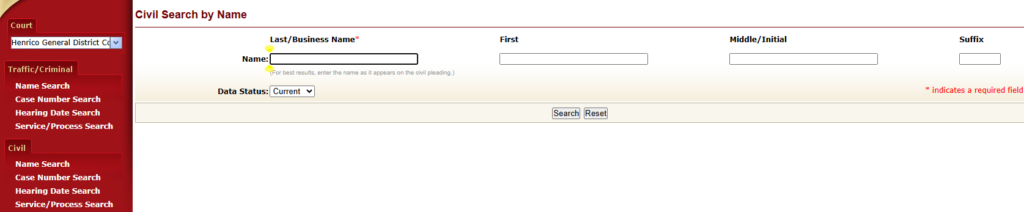
- Name Search: Enter first and last name of a party
- Case Number Search: Enter the exact case ID (fastest method)
- Traffic Citation Search: Enter citation number (for traffic cases)
- Hearing Date Search: Search cases scheduled on a specific date
Searching by Case Details
Accurate details improve your search results. Use the following inputs carefully:
- Party Name: Use correct spelling (full name gives better results)
- Citation Number: Ideal for traffic violations
- Hearing Date: Helps find scheduled court appearances
Types of Cases Handled in Henrico District Court
The Henrico County General District Court handles traffic and civil court matters, along with minor offenses and other district-level cases. These include traffic violations, civil disputes, and misdemeanor criminal charges processed at the local level. Henrico District Court is part of the Virginia District Courts and works alongside the circuit court system focusing on cases that do not require jury trials in most situations. In the middle of these proceedings traffic court plays a central role in addressing violations, ensuring fair hearings, and resolving cases efficiently. The court manages a high volume of everyday legal issues, making it a key part of local justice. Each case type follows a structured process, from filing to final judgment, with clear records maintained for public review. In addition to hearing cases, the court provides essential administrative services that support the legal process. Clerks assist with filing paperwork, collecting fines, and maintaining accurate records for all proceedings. Individuals can access case information, payment options, and court schedules through official systems, ensuring transparency and convenience. The court also enforces strict timelines and procedural rules, helping cases move efficiently through the system.
Traffic Related Cases
Traffic cases make up a significant share of district court proceedings in Henrico County, reflecting the everyday nature of driving-related violations. These cases typically involve offenses such as speeding, reckless driving, failure to obey traffic signals, driving without a valid license, and operating an uninsured vehicle. Law enforcement agencies actively monitor roadways to ensure compliance with traffic laws, which helps maintain safety for all drivers, pedestrians, and cyclists. When a traffic violation occurs, the individual usually receives a citation that includes details about the offense and instructions for resolving the matter. Depending on the severity, some cases can be settled by paying a fine, while others may require a court appearance. More serious violations, such as reckless driving or driving under the influence, can lead to higher penalties, including license suspension, increased insurance costs, or even jail time.
- Speeding tickets
- DUI (driving under the influence)
- Reckless driving
- Driving without a valid license
Civil Dispute Cases
Civil cases involve legal disagreements between two or more parties, usually related to money or property. These cases form a significant portion of the workload in traffic and civil courts in Henrico, reflecting the wide range of disputes that arise in everyday life. Common types of civil cases include landlord-tenant disagreements, contract disputes, personal injury claims, and small claims involving relatively low monetary amounts. Unlike criminal cases, civil matters do not involve charges against the state but instead focus on resolving private conflicts between individuals or organizations. In Henrico’s traffic and civil court system, many cases are handled efficiently through streamlined procedures designed to reduce delays and ensure fair outcomes. Small claims cases, for example, often allow individuals to represent themselves without the need for an attorney, making the process more accessible and cost-effective.
- Landlord-tenant disputes
- Property damage claims
- Debt collection cases
- Contract disagreements
Minor Criminal Offenses
The district court handles misdemeanor cases, which are less serious than felony charges. These minor offenses still require formal legal processing. Although misdemeanors typically involve less severe penalties—such as smaller fines, shorter jail sentences, or probation they are still criminal matters that can impact a person’s record, employment opportunities, and overall reputation. District courts ensure that each case is reviewed fairly, following established legal procedures and protecting the rights of both the accused and the victim. Common examples of misdemeanor cases include petty theft, simple assault, disorderly conduct, and minor traffic violations. During the process, defendants may be required to appear in court, enter a plea, and, if necessary, participate in hearings or trials.
- Trespassing
- Simple assault
- Disorderly conduct
- Petty theft
Court Session Flow and Case Processing
Case processing in Henrico County General District Court follows a clear path from filing to final decision through scheduled court sessions. Each stage tracks legal disputes step by step, from registration and hearings to judgment and case closure. The process is managed through the court system, which handles high-volume district cases with a structured and efficient approach. Every case moves through defined stages that keep records accurate, timelines consistent, and court sessions well organized. This flow helps parties stay informed and supports the fair resolution of legal disputes. Once a case is filed, it is assigned a docket number and entered into the court’s case management system. Parties receive notices outlining hearing dates, filing requirements, and procedural expectations. During preliminary hearings, the court reviews filings, ensures proper service of process, and may address motions or settlement possibilities. If the matter proceeds, it moves to trial, where evidence is presented, witnesses may testify, and arguments are evaluated under applicable law.
Case Filing and Registration Stage
Every case begins when it enters the court system through a formal filing. This stage sets the foundation for all future case processing steps and ensures that the legal matter is properly documented from the outset. At this point, the plaintiff or petitioner submits the necessary paperwork to the appropriate court, outlining the nature of the dispute, the parties involved, and the relief being sought. Accuracy and completeness are essential, as any missing or incorrect information can delay the process or result in rejection of the filing. Once the documents are received, court clerks review them to confirm compliance with procedural requirements, assign a case number, and officially record the case in the system. Filing fees are typically paid during this step, unless a waiver is granted based on financial need. After acceptance, the case becomes part of the public record, allowing it to proceed to the next phases, such as service of process and initial hearings.
- A complaint in a civil dispute
- A traffic citation issued by law enforcement
- A criminal charge filed for a minor offense
- Court clerks receive and review the submitted documents
- A unique case number is assigned
Hearing and Judicial Review Stage
After registration, the case moves into the hearing phase, where court sessions take place. These sessions allow both sides to present their position. During this stage, each party is given the opportunity to submit evidence, call witnesses, and make legal arguments in support of their claims. The judge carefully reviews all submitted materials, listens to testimonies, and may ask questions to clarify key points. This phase is critical because it forms the foundation upon which the final decision will be made. In many cases, multiple hearings may be scheduled depending on the complexity of the matter. Preliminary hearings may address procedural issues, while subsequent sessions focus on detailed examination of facts and evidence. Both parties must ensure that their documentation is accurate, complete, and submitted within the required timelines to avoid delays or penalties.
- Scheduled trial dates or hearing sessions
- Presentation of evidence by both parties
- Witness statements, if required
- Legal arguments from attorneys or self-represented parties
Public Access to Court Case Information
Henrico District Court, Virginia records access allows the public to view a wide range of non-confidential court records, including case details, hearing schedules, filings, and final outcomes. This transparency ensures that individuals can stay informed about legal proceedings and better understand how the judicial system operates. Whether someone is researching a case, verifying court dates, or reviewing decisions, the system offers a convenient and reliable way to obtain accurate information. Access is typically provided through the Virginia Judicial System’s online platforms, making it easy for residents, attorneys, journalists, and researchers to find relevant data without needing to visit the courthouse in person. However, not all records are openly available. Certain sensitive information such as juvenile cases, sealed documents, or records involving personal identifiers—remains restricted to protect privacy and uphold legal rights.
What Information is Publicly Available
Many district court records are open for public viewing, offering valuable insight into how the legal system operates at the local level. These records help individuals, researchers, and legal professionals track legal activity and stay informed about both ongoing and completed cases. By accessing open case records, users can follow the full timeline of a case—from the initial filing and motions to hearings, rulings, and final judgments. This transparency promotes accountability and ensures that court proceedings remain accessible to the public. Hearing schedules included in these records allow people to stay updated on when court sessions are set to take place, making it easier for involved parties, journalists, or observers to attend. In addition, case outcomes clearly show how each matter was resolved, whether through dismissal, settlement, or trial verdict.
- Case numbers and case type
- Names of parties involved
- Filing dates and court actions
- Hearing schedules and court dates
- Final outcomes and judgments
What Information is Restricted
Some court records are not available to the public. These limits protect personal data and maintain legal privacy. These restrictions help balance transparency with the need to protect people involved in legal matters. In many jurisdictions, access is restricted for cases involving sensitive issues such as juvenile proceedings, family law disputes, adoption records, and cases involving victims of abuse. Sealing or redacting certain records ensures that confidential information like social security numbers, medical histories, financial details, and home addresses—does not become publicly accessible. This is especially important in the digital age, where information can spread quickly and be difficult to remove once published online.
- Sealed cases ordered by the court
- Juvenile case records
- Sensitive personal or financial details
- Certain criminal investigations
Importance of Transparency in Court Records
Public access to court records plays a key role in building trust in the legal system. Open records allow the public to see how decisions are made and how legal disputes are handled. Transparency supports the open courts principle, which promotes fairness and visibility in judicial proceedings. Clear access to court data makes the justice system more reliable and understandable. At the same time, restricted records protect sensitive information, creating a balanced approach between openness and privacy. In addition, public access encourages accountability among judges, attorneys, and other legal professionals. When court proceedings and records are available for review, it becomes easier to identify errors, misconduct, or inconsistencies in decision-making. This openness can lead to improved standards and greater confidence in judicial outcomes. Researchers, journalists, and policymakers also benefit from accessible records, as they can analyze trends, study legal precedents, and propose reforms based on real data.
- Builds public trust in court decisions
- Holds the legal system accountable
- Helps verify case outcomes
- Supports research and reporting
Location and Contact Information
The Henrico County General District Court location is in Henrico, Virginia, and serves residents through in-person services, phone support, and scheduled court sessions. Visitors can contact the clerk’s office, check hours, and follow entry rules before arriving. The Henrico County General District Court provides public services at its main courthouse facility. This location handles traffic, civil, and misdemeanor cases and offers both walk-in assistance and scheduled hearings. Clear contact options and visitor guidelines help people reach the court and manage their legal matters without confusion. This central location makes it accessible for residents across the county. The building is designed to accommodate public access, with clearly marked entrances, security checkpoints, and designated service counters.
Office Communication Channels
The court offers multiple ways to connect with staff for assistance. Staff members provide general information but cannot offer legal advice. Knowing the exact henrico county general district court location and contact details helps visitors plan their trip, connect with the clerk’s office, and attend court sessions without delays. Electronic devices may be limited in certain areas, and visitors must follow all posted rules inside the courthouse.
- Address: 4110 Chain Bridge Road, Henrico, VA 23228
- Phone: (804) 501-4723
- Office hours: Monday to Friday: 8:00 AM – 4:00 PM
Frequently Asked Questions
This Henrico General District Court case info FAQ covers common court records questions, including how to search cases, what records are available, and what details are needed. It helps users find accurate information quickly using official court resources. It also explains how public access works under Virginia court rules, including which case details may be restricted for privacy reasons such as juvenile or sealed matters. Users can learn how to locate criminal, traffic, and civil case information using a case number, party name, or hearing date. The FAQ outlines how to interpret docket entries, understand case status updates, and request copies of documents from the clerk’s office. It further guides users on possible processing times, fees for certified records, and how frequently online databases are updated for accuracy.
How can I find a case in Henrico General District Court?
You can search for a case online through the official system provided by the Virginia Judicial System. Enter details like a party name, case number, or citation number to locate records. The online portal is the fastest way to check case status, hearings, and outcomes. You can visit the clerk’s office at the Henrico County General District Court for in-person help. Staff can assist with record searches and provide printed case details if needed. The system updates regularly, so users can track changes in real time. If online search results are unclear, trying different spellings or partial names can improve accuracy. Case lookup tools are designed to support public access while keeping information organized and easy to review.
What types of cases are handled in Henrico District Court?
Henrico District Court handles a wide range of district cases related to everyday legal matters. These include traffic violations such as speeding or DUI charges. Civil cases involve disputes like contracts, property issues, or small financial claims. The court handles minor criminal offenses, often called misdemeanors, such as trespassing or disorderly conduct. Each case type follows a structured process from filing to final decision. These cases are typically resolved without a jury and are heard directly by a judge. The court manages a large volume of cases daily, which helps maintain an efficient local justice system. Records for each case type are stored separately, making it easier for users to search and understand outcomes.
Are all court records publicly available?
Not all court records are open to the public. Many case details, including filings, hearings, and judgments, are available through public lookup systems. Some records are restricted to protect privacy and legal rights. Sealed cases, juvenile matters, and sensitive personal information are not displayed publicly. The system balances transparency with privacy by limiting access to protected records. Even when records are available, certain personal identifiers may be hidden or redacted. Public access is designed to support legal awareness while maintaining confidentiality where required by law. This ensures that open justice principles are followed without exposing private or sensitive information. Users should understand that availability depends on case type, court orders, and legal restrictions applied by the court system.
How long does it take for a case to appear in records?
A case usually appears in the system shortly after it is filed and processed by court clerks. In many situations, records are updated within a few business days. The exact timing depends on the type of case and how quickly documents are entered into the system. Traffic citations may appear faster than complex civil cases. Users should check again later if a case does not appear right away. Delays can happen due to manual entry, verification steps, or high court workload. Once entered, the record becomes part of the official database and can be tracked through updates. Regular system updates ensure that users can view the most current case status, including hearings and judgments as they are recorded by the court.
What information is needed to search a court case?
You need basic case details to perform a successful search. The most accurate method is using a case number if it is available. You can search by party name, including first and last name, for broader results. A citation number is useful for traffic-related cases. Hearing dates can help narrow down results when searching for scheduled cases. Accurate and complete information improves search results and reduces errors. Even small spelling mistakes can affect outcomes, so careful entry is important. Users may also filter by case type, such as civil, traffic, or criminal, to refine results. Providing multiple identifiers increases the chance of finding the correct record quickly within the system.